A Policy Oracle series that tests Kenya's devolved system against its own numbers: what counties raise, what they spend, and what residents receive in return.
Kenya's 47 county governments took office in 2013. They run most public health services, county roads, agriculture and local services, and they answer for their money to the Controller of Budget, the Auditor-General and their own assemblies.
The State of Devolution reads those official records closely. Each part takes one question, rebuilds the figures from the source tables, and publishes the data in a form readers can sort, filter and test for themselves.
Counties collected KSh 78.76 billion in own-source revenue in FY 2025/26, 74 per cent of target. The official headline of 90.25 per cent also counts KSh 17.32 billion that was booked but never received. On ordinary revenue alone, counties collected less than 60 per cent of target, and they left a…
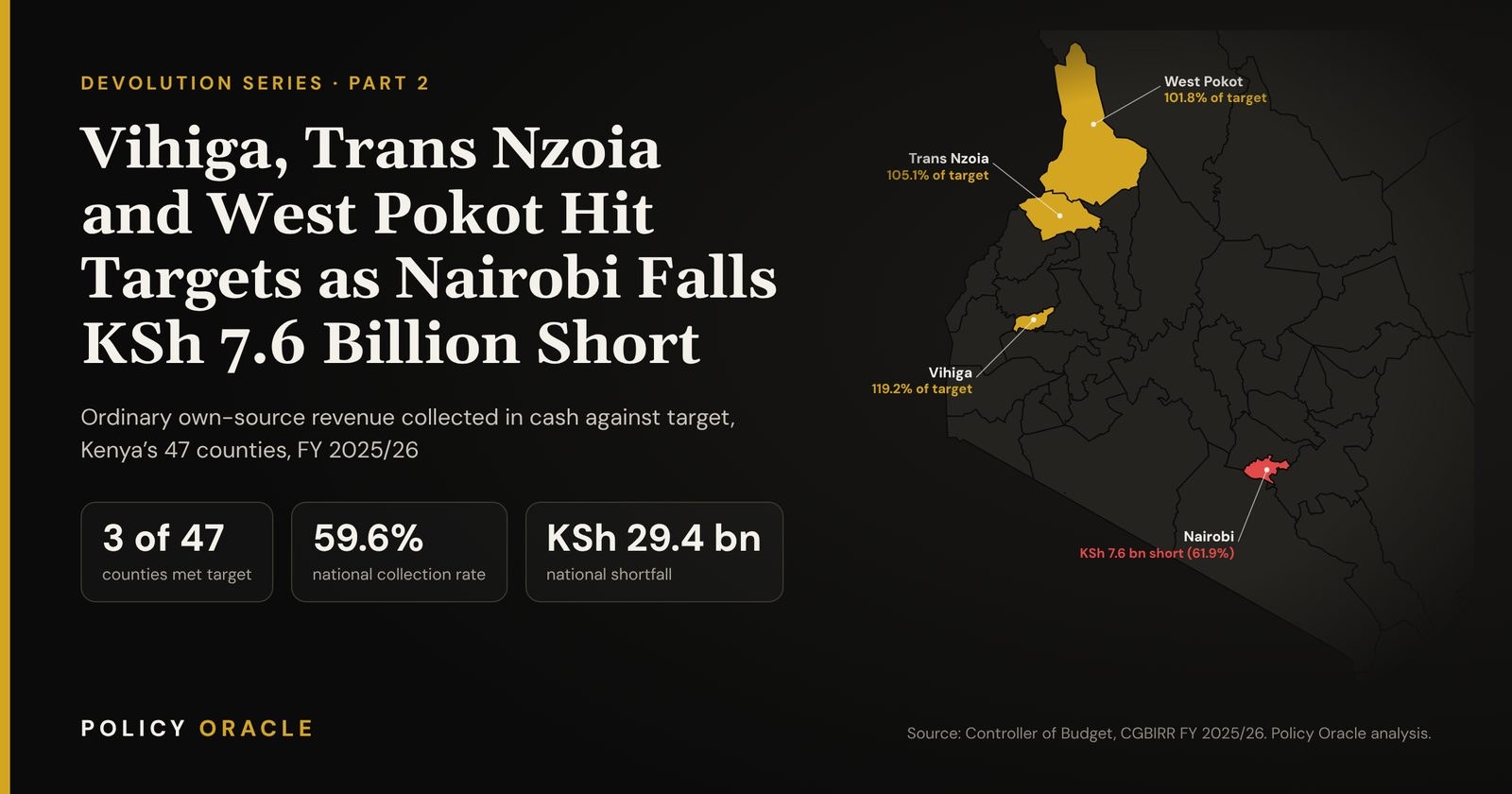
The three are the only counties to collect their full ordinary own-source revenue targets in FY 2025/26. Siaya collects less than a seventh of its target, and Kenya’s 47 counties together raise KSh 43.34 billion of the KSh 72.77 billion they budgeted to collect from their own taxes and fees.
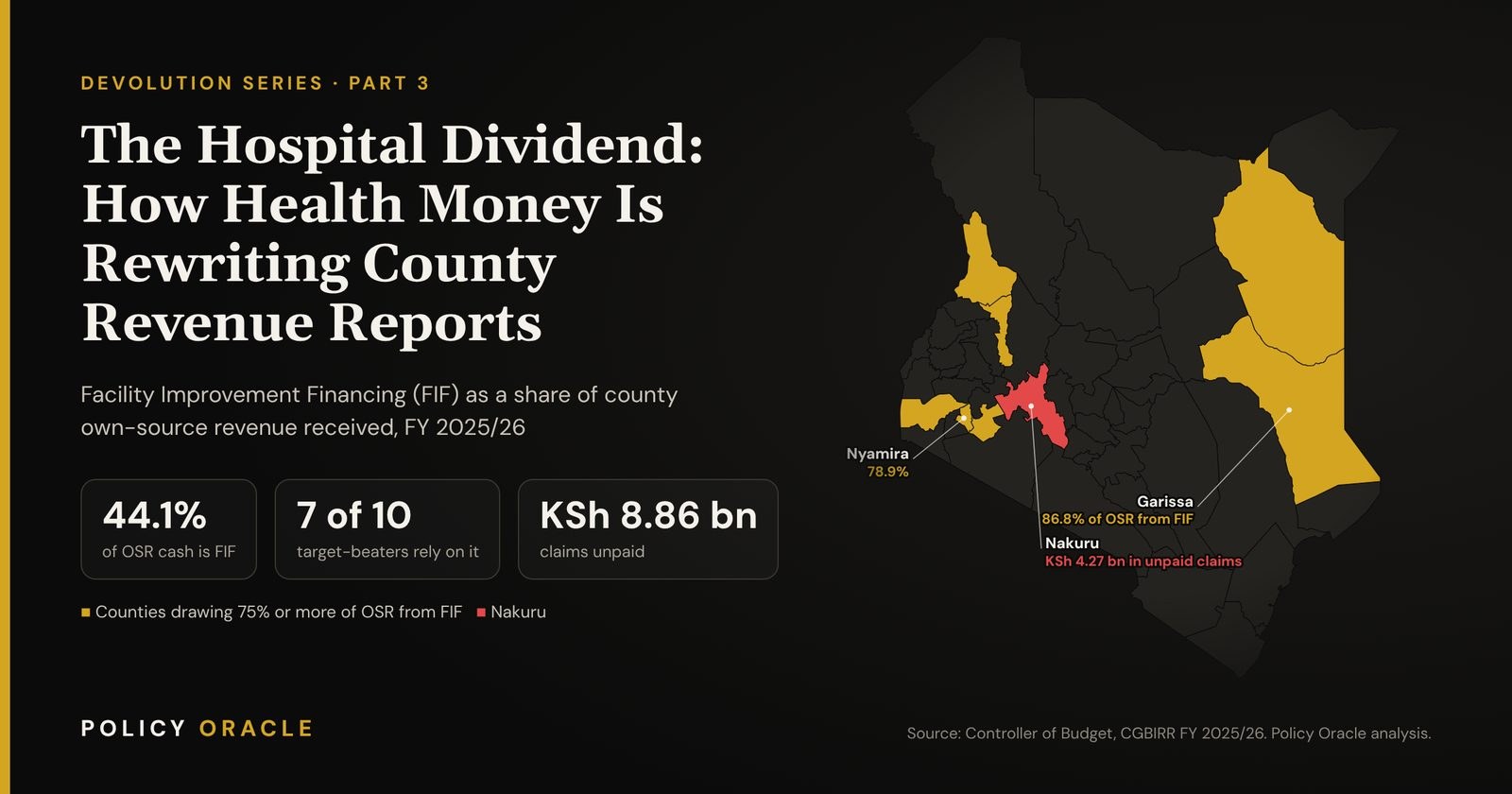
Facility Improvement Financing supplied 44 per cent of the cash Kenya’s counties collected in FY 2025/26 and beat its target, while ordinary revenue fell 40 per cent short. Seven of the ten counties that met their revenue targets did so only because of hospital money. Behind those figures sit KSh…
The county collected 13 per cent of its ordinary revenue target and left KSh 2.88 billion of its budget without a source of funds. Policy Oracle traces the gap to its authors: more than four-fifths to revenue targets the County Executive wrote and the County Assembly approved, the rest to national…
Nearly half went on wages and a quarter on development. KSh 511 billion of approved development money was never spent, and the stock of unpaid bills has risen 80 per cent since 2021. As counties enter the last full financial year before the August 2027 general election, Policy Oracle reviews where…
· 15 min read · Interactive
Report alerts
New reports, the day they publish.
Each new report and each new part of a series, by email, with a short note on what it found. No other mail, and you can leave at any time.